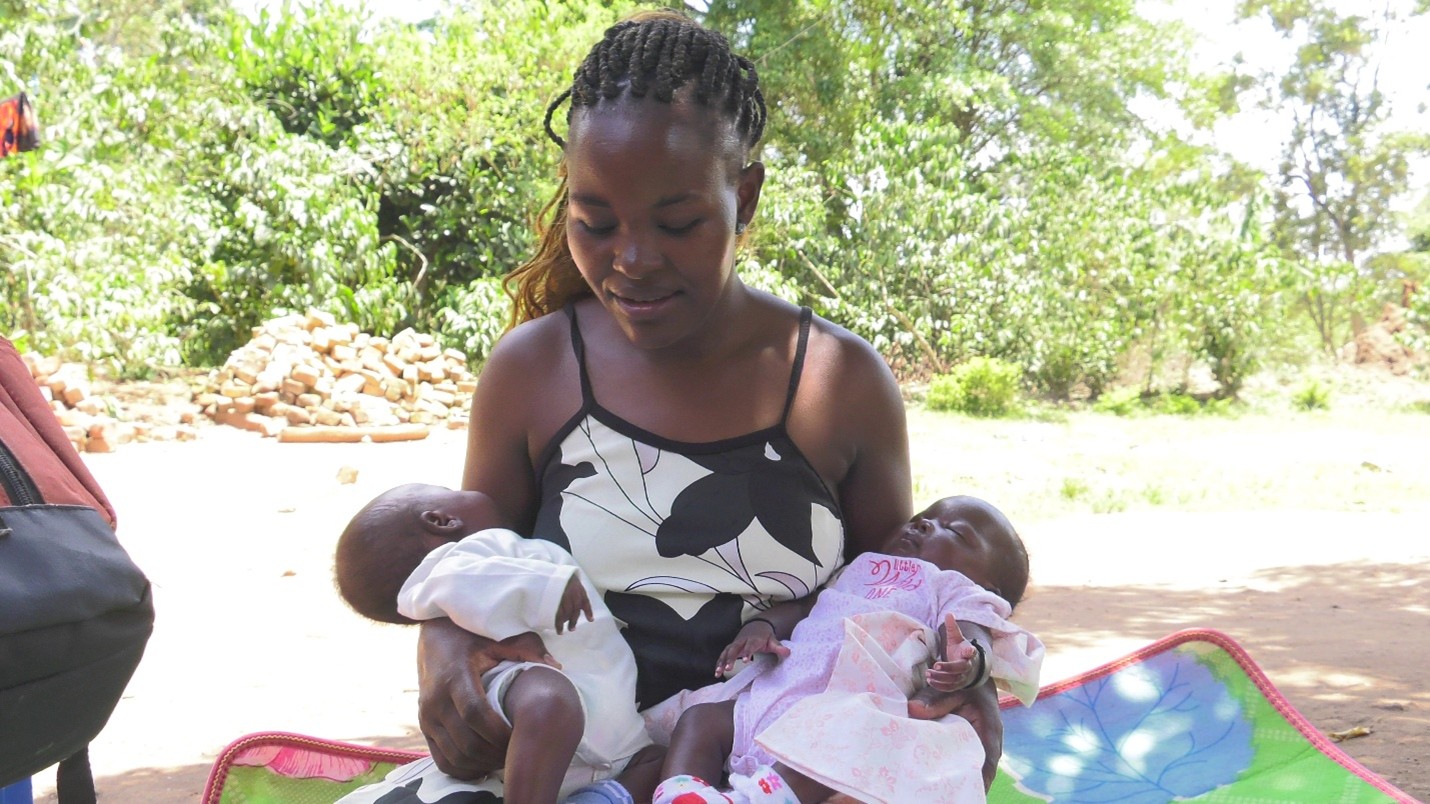
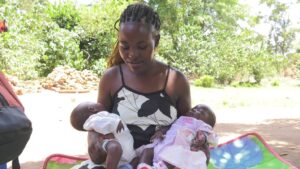
Ms. Rehema with her thriving twins at home in Kiwoko supported through H2H for their continued health and growth.
In her early twenties, Rehema, a young mother in Kiwoko, was overwhelmed when she gave birth to premature twins. Both babies were weak, small, and immediately admitted to the Neonatal Care Unit (NCU) at Kiwoko Hospital. Like many mothers in rural Uganda, Rehema feared for the worst.
“I was scared. My babies were too small and I didn’t know how I could manage on my own after leaving the hospital,” Rehema recalls.
But Rehema’s story would not end in fear—thanks to the Hospital-to-Home (H2H) Model/initiative, part of the Uganda Newborn Programme, implemented by Adara Development Uganda with generous support from ELMA Philanthropies.
“What helped me most was that I wasn’t left alone. The health workers followed up at home, taught me how to feed and care for my twins, and checked their weight regularly,” Rehema says with gratitude.
Trained Village Health Teams (VHTs) supported Rehema through Post-discharge home visits that included Monitoring of the babies’ weight and temperature, Breastfeeding support and Education on newborn danger signs as well as hygiene
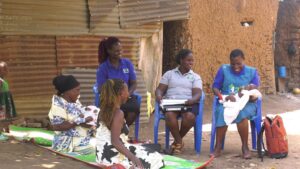
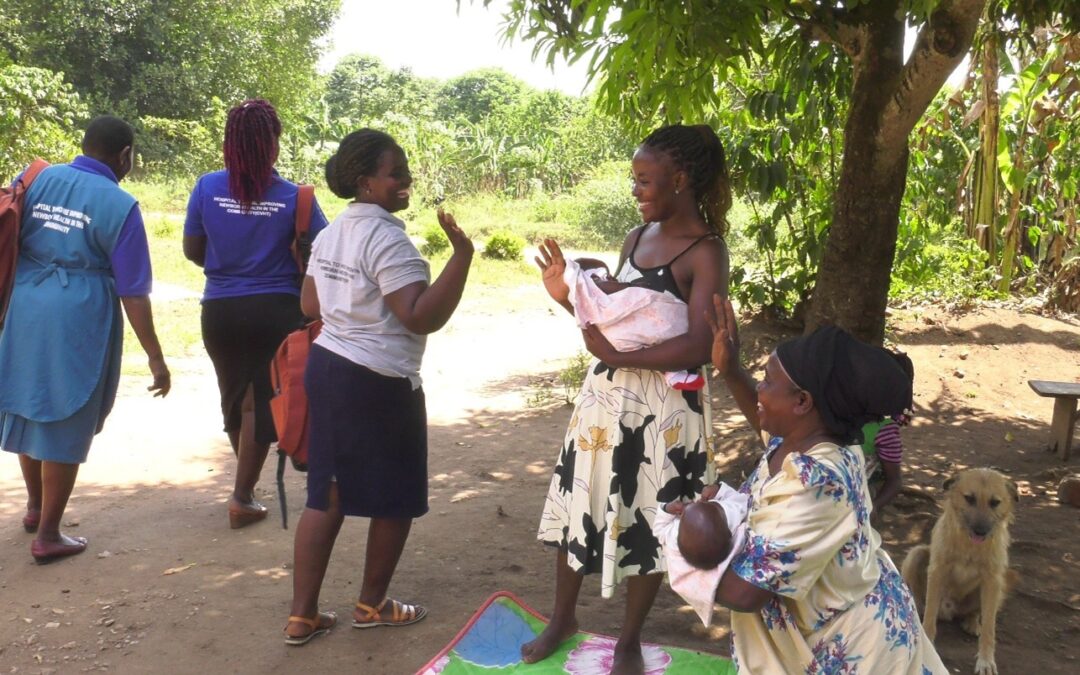
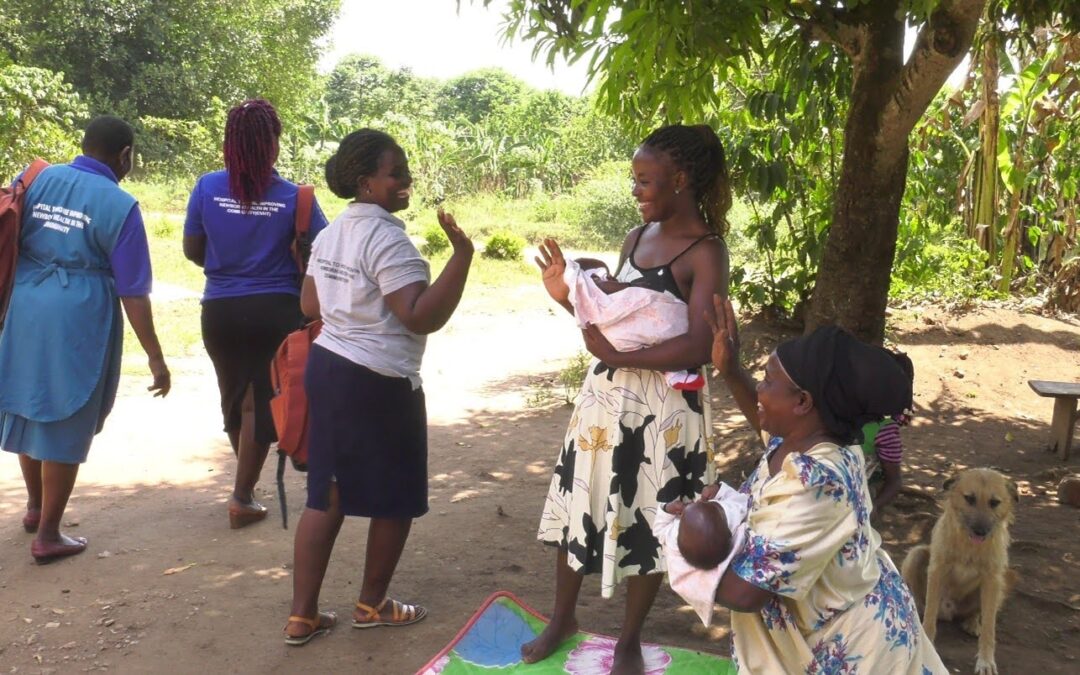
Cornety Nakiganda Kivumbi, H2H Programme Lead, joyfully carrying one of the twins during a home visit, accompanied by the entire H2H Programme team, including Nasuuna Jesca (VHT) and Seela Margret.
Today, Rehema’s twins are thriving. They’ve passed their critical early milestones and continue to grow stronger under her care.
“Without the follow-up at home, I don’t think my babies would have survived. I’m forever grateful,” Rehema says.
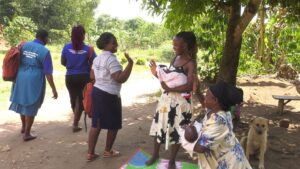
The Hospital-to-Home (H2H) team, consisting of Nasuuna Jesca (VHT), Seela Margret, and far right, Sr. Cornety Nakiganda Kivumbi, the H2H Programme Lead, waving goodbye after a successful home visit to Rehema and her twins under the H2H Model in Kiwoko.
Her story is not just one of personal victory but it’s one of many success stories made possible with support from ELMA Philanthropies through the Hospital-to-Home (H2H) model. It’s proof that this approach works. It’s practical, scalable, and most importantly, it’s saving lives and bringing hope to families across Uganda.”
The Hospital-to-Home (H2H) model is one of the key interventions under the Uganda Newborn Programme, which is being implemented by Adara Development Uganda with support from ELMA Philanthropies. This model aims to build capacity within communities to support small and sick newborns after hospital discharge. A major component of the H2H model is the training and equipping of Village Health Teams (VHTs) to mobilize communities and conduct postnatal care home visits within three days of the newborn’s discharge. These visits are crucial for ensuring that mothers and their babies continue to receive vital care, information, and support during the critical first few days at home.
The model was first piloted at Kiwoko Hospital, where community health workers received intensive training, supportive supervision, and monthly peer engagement. These frontline workers became trusted extensions of the hospital delivering lifesaving care at the household level. This model is also being piloted in Nakaseke hospital, a government hospital and the findings will guide scale up to government facilities by Ministry of health and partners.