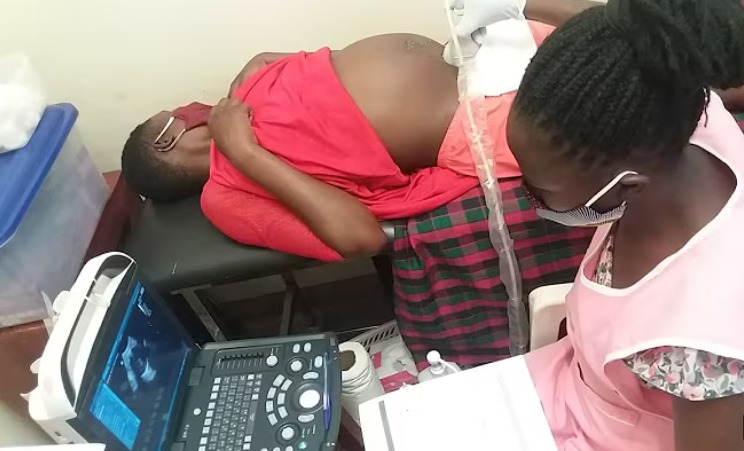
Every 30 seconds, a baby is stillborn in Africa. Almost two million babies are stillborn or die shortly after birth each year across the continent, despite most women giving birth in health facilities.
As more women access facility-based childbirth, attention is increasingly shifting from access to care to the quality of care women and newborns receive during labour and childbirth. A number of strategies have been developed to improve the quality and safety of childbirth care. However, translating evidence-based practices into consistent routine care remains challenging, particularly in resource-constrained health systems.
To address this gap, researchers from Karolinska Institutet and Makerere University School of Public Health, through the Centre of Excellence for Maternal, Newborn and Child Health (MNCH Centre), together with partners across four African countries, have developed and evaluated the ALERT intervention—an evidence-based, context-specific approach designed to strengthen childbirth care and reduce early perinatal deaths.
Rather than relying on a single intervention, ALERT brings together co-design, competency-based training, quality improvement and leadership mentoring to strengthen routine care during labour and childbirth.
Testing ALERT across four African countries
The study, jointly led by researchers at Karolinska Institutet and Makerere University, was conducted in 16 high-caseload hospitals in Benin, Malawi, Tanzania and Uganda.
Between July 2021 and December 2023, the study included 134,630 women who gave birth to 139,300 newborns, alongside 4,007 postpartum exit interviews assessing aspects of respectful and responsive care.
Researchers used a stepped-wedge cluster-randomised trial, in which hospitals moved from comparison to intervention periods at different points during the study, with all participating hospitals eventually receiving the intervention.
How ALERT was implemented
ALERT began with co-design, bringing together women, families and maternity care providers to identify gaps in care, barriers to better practice and potential solutions within each setting.
These findings informed competency-based training for midwives and other maternity staff. The training reinforced essential intrapartum practices while also strengthening communication, teamwork and clinical decision-making.
Hospitals also received support to strengthen quality-improvement activities, enabling maternity teams to identify problems and develop locally appropriate solutions.
A fourth component focused on leadership mentoring for maternity ward managers. Mentoring supported leaders to strengthen implementation and address organisational barriers to evidence-based care. Follow-up mentoring included on-site support, phone calls and digital communication such as WhatsApp.
The researchers also established a digital perinatal register to collect information on births and outcomes. The register supported research data collection while providing feedback that could help healthcare teams monitor and improve care.
ALERT linked to fewer early perinatal deaths

Following introduction of the ALERT intervention, researchers found 22% lower odds of in-facility early perinatal mortality, defined as fresh stillbirth or neonatal death within the first 24 hours of life.
The intervention was also associated with 19% lower odds of hypoxic-ischaemic events, conditions linked to oxygen deprivation around birth.
Researchers observed improvements in fetal heart-rate monitoring, with monitoring on admission increasing from 89% to 95%.
The study also found a 14% increase in caesarean sections, from 27.4% to 29.4%. Considered alongside the reductions in mortality and hypoxic-ischaemic events, the researchers suggest that this increase may reflect earlier identification of complications and more timely escalation of care.
Importantly, ALERT achieved improvements in perinatal outcomes without introducing new technological innovations. The findings highlight the potential of strengthening routine care, provider competence, quality improvement and leadership support to improve childbirth outcomes.
Building on evidence from the Preterm Birth Initiative in Kenya and Uganda
The ALERT findings add to growing evidence that comprehensive approaches can improve childbirth and newborn outcomes in resource-constrained settings.
For example, the Preterm Birth Initiative in Kenya and Uganda reported a 34% reduction in the odds of mortality among preterm neonates following a comprehensive quality-improvement strategy. Studies in Nepal and the Democratic Republic of Congo have also reported positive effects from approaches combining training, quality improvement and mentorship.
One distinctive feature of ALERT was its focus on routine intrapartum care, rather than concentrating only on emergency obstetric complications.
The findings suggest that strengthening basic childbirth care, including preventive and promotive midwifery care, can contribute to reducing perinatal mortality and morbidity. They also reinforce the importance of improving the quality of everyday care during labour as countries work towards the goals of the Every Woman Every Newborn Everywhere (EWENE) initiative.
A model with potential for scale-up
ALERT was designed to respond to local needs while bringing together several complementary approaches within routine health systems.
The economic analysis estimated the additional cost per perinatal death averted at US$805 in Benin, US$2,651 in Malawi, US$3,188 in Tanzania and US$760 in Uganda, with travel costs accounting for the largest share of implementation costs.
The combination of co-design, competency-based training, quality improvement and leadership mentoring was intended to make improvement part of routine care rather than a one-off training activity.
Together, these features point to the potential for adapting the ALERT approach across different health-system contexts, particularly where resources and specialist personnel are limited.
What comes next?
While ALERT was associated with improvements in mortality and newborn morbidity, the study found no measurable effect on responsiveness or respectful care during the trial period.
The researchers suggest that measurement limitations, the time required for changes in interpersonal behaviour to become sustained, and wider structural and policy constraints may partly explain this finding.
Looking ahead, the researchers point to better fetal monitoring and decision support as important areas for further work. Future approaches could include improved guidelines and potentially AI-supported decision-support systems, developed in collaboration with healthcare workers.
Overall, the study suggests that meaningful improvements in childbirth outcomes do not always require new technologies. Strengthening how routine care is delivered through provider competence, quality improvement, co-design and leadership support can offer a practical pathway for improving intrapartum care in resource-constrained settings.
Leveraging evidence through partnership
The study brought together researchers from Karolinska Institutet, Makerere University School of Public Health, the Institute of Tropical Medicine Antwerp, Kamuzu University of Health Sciences, Muhimbili University of Health and Allied Sciences, Aga Khan University and other partner institutions across the four countries.
The research team included Claudia Hanson, Joseph Akuze, Kristi Sidney Annerstedt, Helle Mölsted Alvesson, Sunjuri Sun, Manuela Straneo, Nicola Orsini, Lenka Benova, Mechthild M. Gross, Bruno Marchal, Rian Snijders, Effie Chipeta, Prof. Peter Waiswa, Hussein Kidanto, Jean-Paul Dossou and Andrea Barnabas Pembe, together with the wider ALERT Consortium.
For the Makerere University MNCH Centre, the research demonstrates the value of leveraging partnerships and evidence to address persistent challenges in maternal and newborn health.
The central lesson is clear: increasing access to health facilities remains essential, but access alone is not enough. The quality of care delivered during labour and childbirth can determine whether women and newborns survive and experience a safe beginning to life.
ALERT provides evidence that strengthening the systems, skills and practices surrounding routine childbirth care can be an important part of closing that gap.
The study was published in Nature Medicine on 26 August 2026.
Read the full paper: https://www.nature.com/articles/s41591-026-04599-w#Sec11